
Last Updated on 5th February 2026
As a keen walker and photographer, I’m often out in the sticks looking for the next great photo. I’m mostly interested in landscapes, but I’m usually distracted by the call of a bird or the movement of an animal, whether it’s wild or farmed. When that happens, I get the desire to hunt it down and shoot it – with my camera!
Like many, I am incensed by those who wish to inflict harm on our precious wildlife. Especially when they do it just for fun. Or for ‘sport’. A pastime that is somehow branded a national tradition. And because it’s a tradition, well, they have to uphold it and carry on their barbaric, murderous activities. It’s lunacy!
We allow women to vote nowadays, and we don’t gather to watch a good old hanging. We don’t send kids down the mines anymore, and we don’t gather to stone wrens on St Stephen’s Day. So why the hell do we allow any form of hunting or blood sport in this day and age? It is completely and utterly out of step with the common beliefs and values of UK society.
Fox Hunting
I am publishing this just two days before the traditional Boxing Day Hunt.
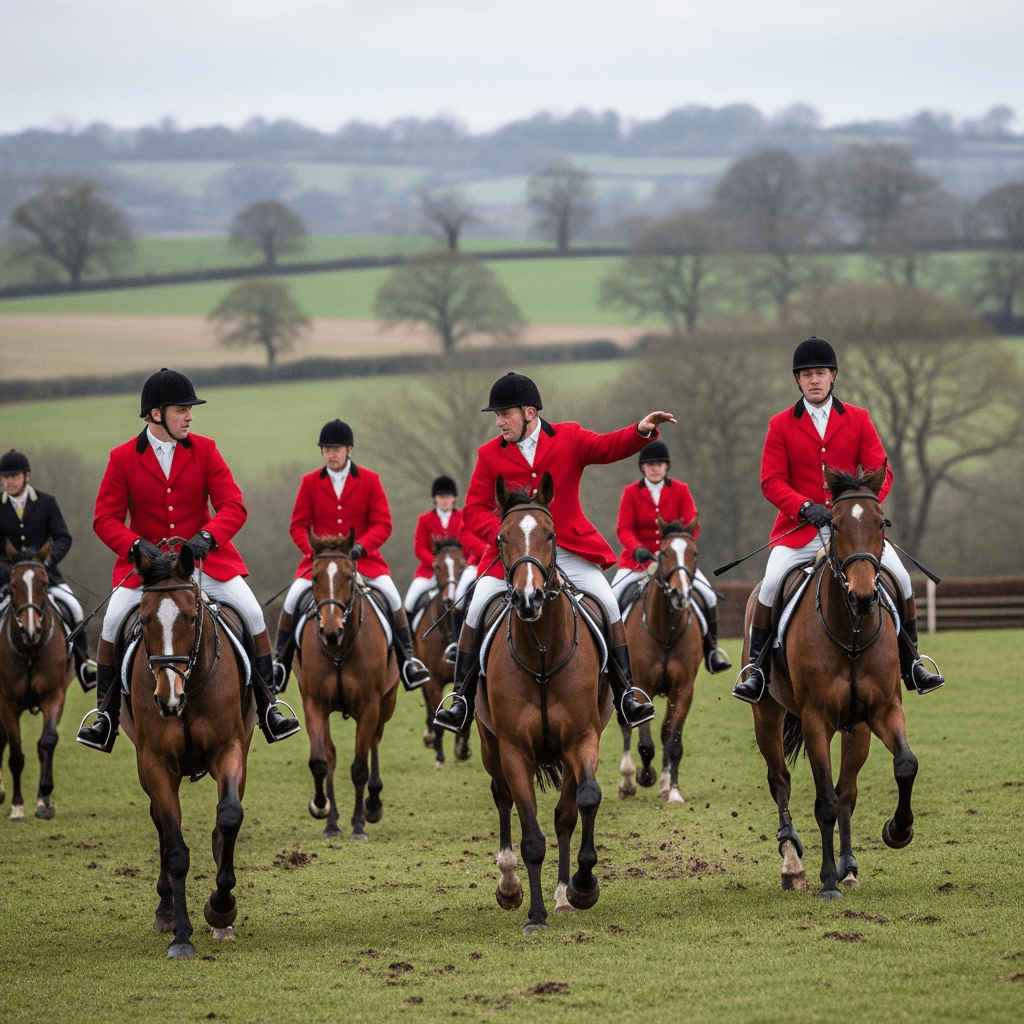
Fox hunting with dogs was banned back in 2004. Yet, hunt meetings still prevail. The huntsmen, wearing their splendid regalia, sit in the saddle on their fine horses. The hounds gather, unleashed, and to the sound of the lead huntsman’s horn, off they trek through villages, lanes, tracks and fields to hunt their prey. I admit, it looks wonderfully impressive, bringing to life the nostalgia depicted in oil paintings hung on the walls of many country pubs, inns and just about every manor house in the land.
The laws passed in 2004 make it illegal to hunt foxes (and all mammals) with dogs. It makes the following legal…
- Trail hunting: Hounds follow a scent trail laid by a human, not a live fox.
- Drag hunting: Hounds follow a scent trail that is not based on an animal’s scent at all.
- Hound trailing: A form of racing where hounds follow a scent trail.
There is evidence and a strong belief that hunters are using Trail hunting as a cover to illegally continue to hunt and kill foxes. Anti-hunting groups have increased in numbers significantly year-on-year. They aim to do all they can, legally, to put the dogs off the scent and sabotage the hunter’s underhanded objectives.
The current Labour Government is executing on its manifesto to ban trail hunting. It has sparked protests from hunting supporters and Conservatives. They also announced that the inheritance tax threshold would be raised from £1million to £2.5million for farmers. That is interesting because farmers are unlikely to give a damn about hunting foxes – they have a right to shoot them if they become problematic – but they can hardly protest against hunting without being shunned.
What Does Fox Hunting Entail?
Hunts are usually hosted by the wealthy. This is because horses and hounds cost a great deal to train and maintain throughout the year. Registered participants can join the hunt – there is usually a fee to pay.
Participants often meet at a manor house, village green or pub. There will likely be refreshments and small bites laid on, which include alcoholic beverages. This is all about socialising, meeting up with friends and acquaintances, and mixing with the classes. Participants are in high spirits, excited, with lots of bravado and loud banter.
Before the meeting, locations are chosen where known fox dens (earths) exist. These are blocked up, along with badger sets, to prevent the foxes from going to ground during the hunt. The hounds are introduced and encouraged to pick up the scent and track a fox.
This North West Hunt Saboteurs’ site is biased toward anti-hunting. However, I think that they provide a good account of what a fox hunt entails, without getting gory, in their article, Fox Hunting All You Need to Know.
The Kill
The issue at heart is the way that the fox is dispatched. Look at articles of those who are biased toward hunting, they claim that dispatch is quick and humane – a nip to the fox’s neck that severs its spinal cord is often mentioned. What they omit is that the fox is first chased, often for many miles, to the point that it is exhausted. That doesn’t seem humane to me.
The nip to the neck theory cannot be upheld. There is too much evidence of foxes being slaughtered in ways that would have incurred a much more drawn-out death. It is cruel, to say the least.
Writing in 2020, some 15 years after the ban, the National Animal Welfare charity, League Against Cruel Sports, cited 485 eye-witness accounts of suspected illegal fox hunting in the previous year, between October 2019 and March 2020. In their article, they linked to a video showing how a fox was pursued over fields onto sanctuary land donated to the charity by Sir Paul McCartney. The land has the express aim of protecting foxes and wildlife. Clearly, huntsmen and their associates have scant regard for the laws of both fox hunting and trespass.
The Violence of Fox Hunters
The Mirror posted a video on YouTube demonstrating the lengths that hunters will go to in upholding what they clearly believe is their right. I find this both amazing and disgusting. The footage makes it clear that there are not enough resources in our police forces to uphold the laws, not just for fox hunting but also for common and aggravated assault. Take a look at the Violent Reality of Fox Hunting in the UK, posted in 2024. The content is disturbing (women protesters being threatened, pushed and dragged around a field). The video doesn’t show any nasty outcomes for the foxes – best left to the imagination!
Foxes now live among us in the urban setting of our towns and cities. If some of the scenes in the video had played out in a town centre, the perpetrators would have been arrested and given at least a criminal record. You can be arrested just for holding a placard in support of Gaza nowadays! Yet, this violence is real and takes place out in the sticks, out of sight, out of mind.
But Foxes are Vermin, Right?
Any animal or bird could be considered vermin if the conditions fit those who are applying the label. Most people in the UK would consider mice and rats as vermin. They cause much damage to our homes, spread disease and reproduce at a very high rate. If left uncontrolled, the infestation will continue to grow, with no real limitation. Uncontrolled mayhem!
Foxes cannot be described as vermin. Like all dogs, foxes are descended from wolves and are classed as canines. Unlike the dogs used to hunt them, foxes are smart and have sustained their species over thousands of years with no human intervention. If something bad killed off all humans and farm livestock tomorrow, foxes will still be around in thousands of years.
Unlike mice and rats, foxes tend not to outgrow their territories. They live in social groups of typically four, sometimes more, with an equal number of males/females. They raise their young (cubs) in and around their earth (a dug-out underground den). Cubs are born blind and deaf. It takes around four weeks for them to function with all senses, and a further four weeks to show signs of being self-supportive. By late September, the adult cubs, especially the males, disperse to find new territories of their own.
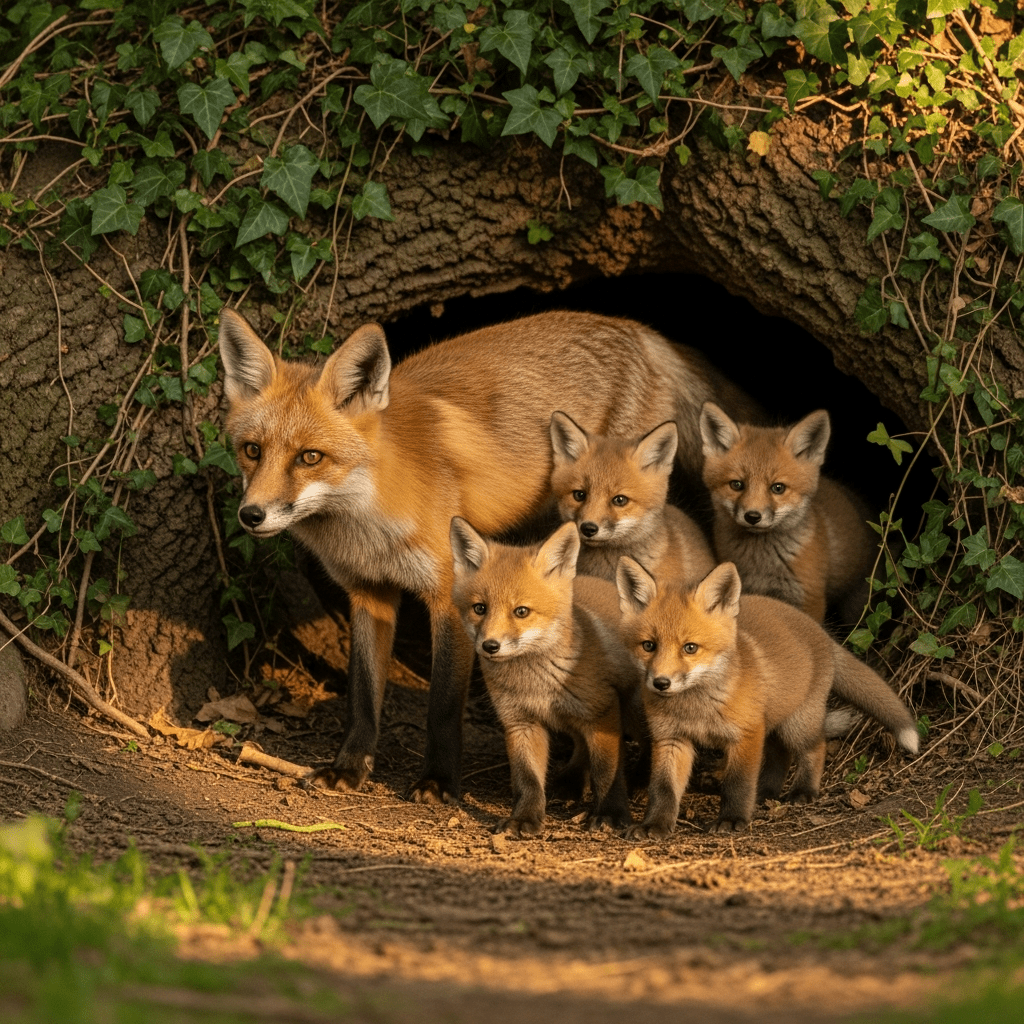
Foxes are not strictly carnivores. They are omnivores, hunting rabbits, young hares, rodents, frogs, birds, and foraging for worms, insects and carrion. They will also eat berries and fruit.
Foxes Kill Farm Livestock.
Yes, they do! They sometimes kill and don’t eat all they kill. Foxes are opportunistic and will kill chickens, ducks and vulnerable lambs. There are also reports of piglets. They may eat the prey there and then, but often eat only what they need, sometimes returning later for more. They have been known to go on killing sprees in chicken sheds. Farm livestock is not the usual daily, weekly or even monthly diet for foxes, but as you would expect, when they kill, it is one of the top issues for farmers. It is the main reason that farmers might classify foxes as vermin.
Aside from the pretty obvious chicken shed slaughters, the killing of lambs is somewhat questionable. There is no doubt that some lambs get killed by foxes year after year. It is also known that domestic dogs kill lambs, along with harsh weather. When a fox is seen eating a lamb, it is possible that something else killed it. The fox might get the blame when it is seen or leaves its DNA when making the most of what something else has killed.
Foxes build their dens near livestock fields. It’s easy to think the obvious – easy food source – and that is true. Not from the livestock itself, though. Where there is livestock, there are birds, rodents and juicy worms. Fields may also be full of crops – food for rabbits and hares.
The UK is not the only place on earth that has the issue of wild dogs. Farmers all over the world need to protect their livestock, and there are various ways of doing so. There are traditional methods, and technology has moved on in leaps and bounds.
Many solutions play an important part in protecting livestock, not just from foxes, but also from other animals, birds of prey, and human hustlers.
Wildlife Online’s article, Red Fox Diet – Pets and Livestock, is a fairly balanced account and worth a read.
Cubbing or Autumn Hunting
This is the dirty and despicable secret of fox hunting. It is illegal, but continues regardless of the 2004 changes in law.
Cubbing and Autumn Hunting is the act of hunting fox cubs with dogs. The League Against Cruel Sports received 172 reported sightings of cub hunting in 2024.
This is how packs of hounds are trained…
The huntsmen often wear tweed jackets rather than red, and will stand, surrounding a copse (small wooded area or ‘covert’) in the early morning or at dusk in the Autumn months up until November. The dogs will be sent into the copse. Any cubs coming out of the copse will be ‘persuaded’ to return by the huntsmen. The dogs are called through the woods by the huntsman on the other side. Any cubs found are torn apart and killed by the hounds.
It is this act that provides the hounds with the skills and edge they need in tracking and killing foxes when the hunt season starts in November.
What Other Animals are Hunted in the UK?
As explained in the article by the North West Hunt Sabs, hounds were originally bred to hunt deer, mink and hares.
Deer and Hare Coursing
Hunting deer and hares (hare coursing) with dogs is also banned under the 2004 laws, but continues, especially in the northeast of England. Ironically, along with rabbits, foxes hunt and eat hares, especially young leverets (they are easier to catch).
The Wildlife Guardian’s article, Hare Hunting, provides an insight into using various breeds of dog for hunting and exhausting hares (no gruesome scenes in this article). I find it shocking that the article cites the cream of UK colleges have been breeding and maintaining such dogs for the hunting fraternity.
It remains legal to shoot deer and hares during set seasons. Again, it is branded a ‘sport’. People of the UK don’t support a transgender male-to-female person boxing a female opponent because they are not equally matched. So how can someone with a gun be considered a fair match for an animal that has only its legs to protect itself? It isn’t an even match, and it is not a sport. It’s just playtime for a bunch of barbaric, mindless people.
Mink and Otter hunting
Although banned in the late 1970s, Otter hunting persists, often as a ‘hidden’ activity under the guise of some other leafy lane of hunting. Mink hunting with dogs is also banned, yet again it persists. The League Against Cruel Sports wrote the article, Standing Against Otter and Mink Hunting. They provide a link to raise the issue and complain to MPs.
Will Beavers be Hunted?
Beavers have recently been reintroduced to some areas of the UK. Time will tell, but these beautiful mammals are most likely already in the firing line for hunters.
The problem is that beavers, like mink and otters, live in the banks of our waterways. Huntsmen force their way through riverbanks using poles, spades/shovels and other tools to rip open wild habitats to expose the animals to the dogs. It’s simply not possible to be selective of beavers, otters or mink.
Grouse and Pheasant Shooting
Yet another of my hates is game bird shooting. It’s typically pheasants where I live, but it can be grouse. It depends on the habitat; grouse are normally moorland habitats, while pheasants are often woodlands.
Game birds are typically managed by an estate or landowner for the pure purpose of shooting, typically in the autumn and into the winter months.
Management, or gamekeeping, involves maintaining the birds and fending off diseases. It also involves keeping off predators. Foxes, stoats, weasels, buzzards and some other animals and birds of prey are shot or snared (some legally) to prevent them from taking game birds.
Participants are either invited or can pay to go on a pheasant or grouse shoot. The airborne birds are shot using one of these methods to expose them…
- Driven – beaters walk a straight line towards the line of hidden shooters, thereby driving the birds towards and over them
- Walked up – the shooters move in a straight line, and their dogs flush out the grouse ahead of them
It’s labelled the sport of kings. Let no one fool us into believing that this is ‘sport’. It’s not! It’s a bunch of 12-bore shotgunners that, frankly, couldn’t miss birds that are pushed to take flight.
Associated Concerns
There are serious concerns with the act of rearing birds just to shoot them. Where it is a seasonal activity, there is a large oversupply of grouse or pheasants, splattered with buckshot, available to whoever wants to eat them. It doesn’t appeal to the masses, so much of it is wasted.
The act of killing predator animals just so there are enough game birds to shoot. That’s sickening!
Ecological arguments come into play…
- Non-native pheasants and red-legged partridges are introduced in large numbers on intensively-managed game bird estates.
- Lead-based ammunition is still used. Imagine eating pheasant, and not only coming across buckshot, but then realising it’s full of lead.
On my walks, I have stumbled upon pheasant farms. It’s kind of cute to see all the chicks running after their mums, all over the place. I now realise that these birds are likely being reared to be dropped onto intensively managed estates for the shooting season. That’s not a cute thought!
What I find most disturbing is that the RSPB supports game bird shooting. Their article, Game Bird Shooting Laws and Impact, highlights what goes on, but it is clear that the RSPB does not support banning the shooting of game birds. No, they want it better licensed, but support continued shoots.
Tradition and Impact
Hunting and shooting are steeped in tradition. Yet that tradition goes back only as far as when guns became more manageable to the masses, in the late 1500s. By contrast, the Red Fox is native to the UK and has been around for 330,000 years!
Hugo Meynell is labelled as the breeder of hounds specifically for hunting foxes in 1753. The railways contributed to the popularity of the ‘sport’, enabling city-folk to get out to the country and do what country-folk apparently do. As fox numbers dwindled due to being hunted in their masses (especially cubs), European foxes were introduced to boost the numbers for hunting. Oh, what fun!
With game bird shooting, we see the same sort of money-based traits. Dartmoor underwent the extremest of court cases in recent years, where a landowner almost got away with outlawing wild camping on moorland. The Supreme Court ruled against him. The land owner? A city hedge-fund manager who bought acres of land on Dartmoor to support his desire for grouse shoots. Seriously, we do not need people like this in our countryside. If game bird shooting is banned, he would likely sell up and flee back to the city. I’m infuriated that he was labelled a ‘farmer’ during the trials!
Conclusion
Out Walking, What Do I See?
I have walked thousands of miles in my time; moorland, country lanes and paths, and coast paths. I have only ever seen the tail of a fox, and that was only because I passed its den and was aware of movement. So I waited downwind of it. The fox came out, must have sensed me, and immediately turned and went back in, showing me its tail. That is how difficult it would be for a human to track and expose a fox in true sportsman style. Then to dive at it and kill it with bare hands? The tables are turned, the fox wins!
I see loads of game birds on my walks. They are not the brightest of birds, given their size, and will take flight from perfectly hidden places when they hear me coming. Weirdly, they don’t move out of the way for vehicles, and many are lost to roadkill. These become carrion for magpies, crows and, likely, foxes too. However, their abundance is out of kilter with their natural surroundings. They are being overbred or introduced purely for shooting events.
The Law Needs to Change
We know that hunting wild animals with or without dogs, illegally or legally (but immorally), persists to this day. The current government are taking welcome steps to ban a bit more, but it is time that MPs set out to outlaw all of it. There is no place in UK society for hunting or shooting. Polls undertaken in recent years have overwhelmingly shown that the population know it continues and wants it banned properly. There are no benefits, just cruel intentions, to appease the few.
There will be moans and groans from those who are connected in some way with hunting and shooting, and some whose jobs are threatened by banning all of it. People have been displaced from their professions over the centuries due to many changes in attitude or technological progress. This will be just another of those events through time. Many should have abandoned their professions many years ago, yet manage to survive. One can only wonder how, if not for illegal activity.
Nature is perfectly capable of managing itself. It does not need human intervention of any kind. Leave a field to the wilds, completely untouched, and I guarantee it will be a wilderness of beauty within just 10 years.
There is further reading on the Wildlife Guardian’s site.
Channel 4 published this fox hunting video highlighting the need for law changes on the 3rd Feb 2026. Some scenes, filmed from afar, may cause upset.


